


.png)

.png)
.png)
Table of Contents
Finding Medically Supervised Alcohol Detox Near Quakertown, Pennsylvania
We know how overwhelming it can feel to search for help with alcohol dependence, especially when you need a program close to home. If you're looking for alcohol detox Quakertown PA services, it's essential to choose a setting that provides 24/7 medical oversight. Alcohol withdrawal can be unpredictable and, in some cases, dangerous, so having access to medication management and continuous monitoring greatly reduces risks.
The Substance Abuse and Mental Health Services Administration (SAMHSA) serves as an authoritative federal resource for locating licensed detox facilities. Through its free, confidential helpline (1-800-662-HELP) and online treatment locator, you can identify programs near you that meet national standards. Many individuals also search for inpatient alcohol detox in Bucks County or medically supervised alcohol detox in Pennsylvania, and no matter which path you explore, we always recommend prioritizing programs with qualified medical staff on site around the clock.
Rosewood Recovery offers multiple levels of care--Partial Hospitalization, Intensive Outpatient, and General Outpatient programs--that can include medically supervised detox as a starting point, based on a thorough individual assessment. Our team works with you to determine the safest, most supportive entry into treatment.
Recovery Begins Here. If you're ready to begin your journey towards happiness and freedom, we invite you to schedule a consult call with our admissions staff. They'll help you start your treatment and walk you through every step with compassion. Results may vary based on individual patient factors and circumstances, and we encourage you to consult with a healthcare provider for professional advice regarding treatment options. Once you have identified a detox program, the next step is understanding what continuity of care looks like--our treatment levels are designed to seamlessly follow detox.
Understanding the Dangers of Unsupervised Alcohol Detox
If you're searching for alcohol detox in Quakertown, PA, it is essential to understand the risks of attempting to stop drinking without professional medical support. Alcohol withdrawal can be unpredictable and potentially life-threatening, yet many people believe they can manage it alone. At Rosewood Recovery, we want to shed light on these dangers so you can make informed decisions about your health.
Why Medical Supervision Is Critical During Alcohol Withdrawal
Without proper oversight, alcohol withdrawal can escalate from mild discomfort to severe complications. According to the Substance Abuse and Mental Health Services Administration (SAMHSA), unsupervised detox can lead to seizures and delirium tremens--a state of confusion, rapid heartbeat, and dangerously high blood pressure. These conditions constitute medical emergencies that require immediate intervention.
A controlled medical environment allows clinical staff to monitor vital signs continuously and administer medications that reduce the intensity of withdrawal symptoms. At Rosewood Recovery, we provide medically supervised alcohol detox Pennsylvania residents can rely on, ensuring safety and comfort throughout the process. SAMHSA guidelines emphasize that professional detoxification is the only way to mitigate the risk of severe outcomes effectively.
By choosing a supervised setting, you are not simply coping with withdrawal; you are taking a crucial step toward long-term recovery.
Recognizing the Warning Signs of Withdrawal
Recognizing the signs of alcohol withdrawal can help you or a loved one seek help before symptoms become critical. Early warning indicators often include anxiety, sweating, tremors, and nausea. As the body reacts to the absence of alcohol, more severe manifestations can appear, such as hallucinations, profound confusion, and cardiac arrhythmias.
SAMHSA highlights that these symptoms can progress rapidly, leaving individuals vulnerable to accidents or life-threatening complications. It is vital to remember that withdrawal is not just uncomfortable--it can be deadly.
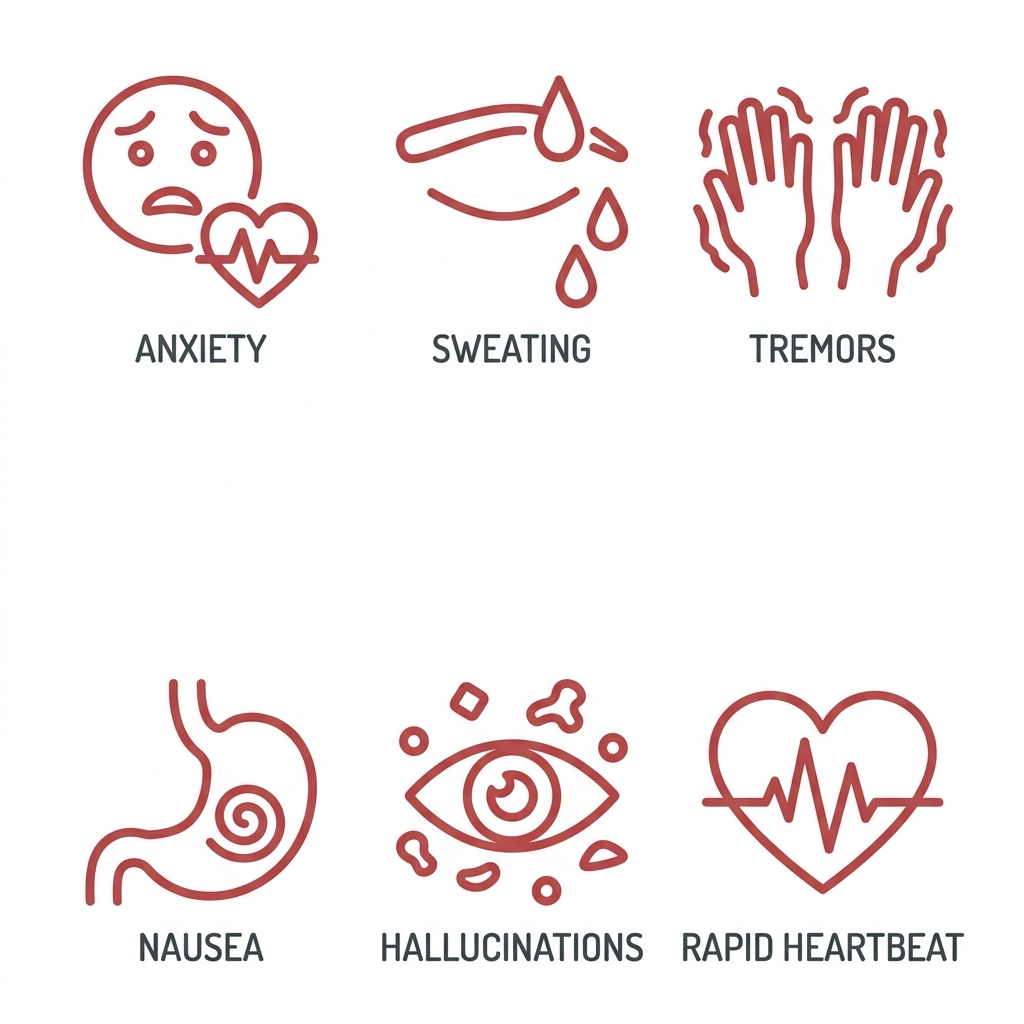
Common alcohol withdrawal warning signs visualization
Understanding when these signs emerge can clarify the value of professional care. The typical progression of symptoms follows a predictable timeline, which can help you prepare for what lies ahead.
How Long Does Alcohol Detox Usually Take?
The alcohol detox timeline generally begins within 6 to 12 hours after the last drink, when mild symptoms first appear. Symptoms typically peak between 24 and 72 hours, the period when severe reactions like seizures or delirium tremens are most likely. Most individuals complete the acute detox phase within 5 to 7 days.
For those considering inpatient alcohol detox Bucks County, Rosewood Recovery's program offers a structured environment where medical professionals manage symptoms around the clock. Inpatient programs in Pennsylvania usually span 5 to 7 days, though factors such as heavy long-term use, co-occurring medical conditions, and age may extend the process.
For those in Pennsylvania seeking a supportive environment, consider reaching out to an Alcohol Abuse Treatment Center Quakertown for a personalized detox plan. At Rosewood Recovery, Recovery Begins Here with your commitment to safe detox, and our compassionate team is ready to guide you toward stability.
This information is for educational purposes and not a substitute for professional medical advice. Please consult with a healthcare provider for advice regarding your specific situation.
The Benefits of Medically Supervised Alcohol Detox
If you're considering alcohol detox in Quakertown, PA, you may be wondering how to begin the recovery process safely. Our medically supervised detox program provides several key benefits that make the process safer and more comfortable.
Around-the-Clock Medical Care and Safety
When you choose our inpatient alcohol detox in Bucks County, you begin your journey towards happiness and freedom with the support of dedicated professionals. Round-the-clock nursing and physician oversight ensures that any withdrawal complications are promptly addressed. According to the Substance Abuse and Mental Health Services Administration (SAMHSA), proper medical monitoring can greatly reduce the risk of severe symptoms such as seizures, delirium tremens, and dehydration. Our staff checks vital signs regularly, manages fluid levels, and offers immediate intervention if symptoms escalate. SAMHSA recommends that medical detox include access to emergency interventions and medication management--exactly what our program provides. This level of care simply is not available when detoxing at home, where unexpected complications can quickly become life-threatening. Recovery Begins Here with a team that prioritizes your health and comfort at every step.
Medications That Ease Withdrawal Symptoms
Medications are an essential part of medically supervised alcohol detox in Pennsylvania, helping to manage withdrawal symptoms and reduce cravings. SAMHSA endorses the use of FDA-approved medications to stabilize brain chemistry and support a safer detox. Benzodiazepines such as diazepam and lorazepam are commonly prescribed to calm the central nervous system, prevent seizures, and ease anxiety. Naltrexone can block the euphoric effects of alcohol, reducing the urge to drink, while acamprosate helps normalize brain activity disrupted by chronic drinking. For some patients, disulfiram is used as a deterrent because it causes unpleasant physical reactions if alcohol is consumed. Our clinical team works closely with each person to design a medication protocol that fits their needs, understanding that no single approach guarantees a pain-free experience. By integrating medication-assisted treatment, we help you move through detox with greater stability and support.
Navigating Insurance Coverage for Detox in Pennsylvania
Understanding your insurance benefits is an important step before starting treatment. We help you verify coverage for detox services in Pennsylvania, whether you have private insurance, Medicaid, or Medicare. First, gather your insurance card and locate the member services number. Call and ask specifically about substance use disorder treatment benefits: is detox considered medically necessary? Does your plan require pre-authorization or a clinical assessment? What copays, deductibles, or coinsurance apply? Many plans--including Pennsylvania's Medicaid and Medicare options--cover medically supervised detox when it is deemed essential. If you're seeking alcohol detox in Quakertown, PA, our team can guide you every step of the way. To find a facility near you, consider an Alcohol Abuse Center Quakertown that accepts your insurance. We encourage you to schedule a consult call to discuss your coverage and start your treatment.
With the foundation of a safe detox, we offer treatment programs such as PHP and IOP to continue your recovery journey. Please note that treatment outcomes depend on patient engagement and individual circumstances. Results may vary. This information is for educational purposes and is not a substitute for professional medical advice.
What Happens During a Medically Supervised Alcohol Detox
Now that you understand why medically supervised detox is crucial, let's walk through exactly what happens during the process at our facility. If you're looking for alcohol detox in Quakertown, PA, knowing what to expect can help you feel more prepared and less anxious. We're here to guide you every step of the way.
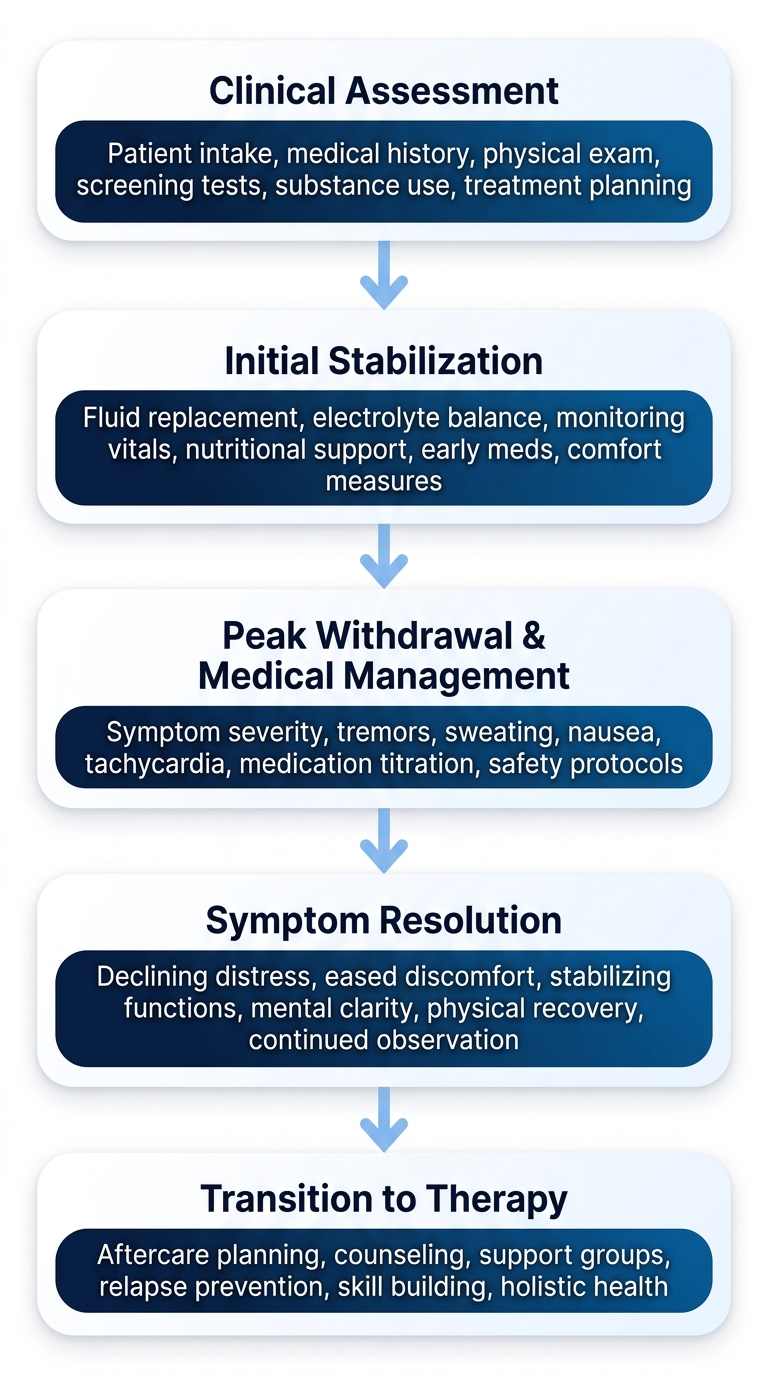
Medically supervised alcohol detox process visualization
Your First Step: The Clinical Assessment
The detox journey begins with a thorough clinical assessment conducted by our experienced medical team. Following guidelines from the Substance Abuse and Mental Health Services Administration (SAMHSA), we review your complete medical history, substance use patterns (type, amount, duration, and time of last use), and vital signs like heart rate, blood pressure, and temperature. We also screen for co-occurring mental health conditions such as anxiety, depression, or PTSD, because comprehensive care addresses both addiction and emotional well-being simultaneously.
During the clinical assessment, we gather comprehensive information to create a personalized detox plan tailored to your needs, right here at our Bucks County drug and alcohol treatment center. Using standardized tools like the Clinical Institute Withdrawal Assessment for Alcohol (CIWA-Ar), we measure withdrawal severity to determine whether inpatient or outpatient care is most appropriate. The resulting plan outlines medication protocols, monitoring schedules, and supportive therapies so you know exactly what lies ahead.
The Detox Timeline: What to Expect Day by Day
Our inpatient alcohol detox in Bucks County follows a structured timeline, though every individual's experience is unique. On Day 0-1, you'll be admitted and settled into a comfortable, private space while our staff initiates stabilization measures. Early withdrawal symptoms--mild tremors, sweating, or nausea--often begin within hours, and we start medications and fluids to keep you safe.
By Days 2-3, peak withdrawal arrives. Our nurses monitor your blood pressure, heart rate, temperature, hydration, electrolyte balance, and mental status every two to four hours, watching closely for any signs of delirium tremens or seizures. Comfort measures like rest, nutritional support, and anti-nausea or anti-hypertensive medications are provided, with benzodiazepines commonly used to manage more pronounced symptoms. Most individuals start to feel significant relief as symptoms gradually subside during Days 4-7. At this stage, we introduce individual and group counseling sessions, allowing you to transition from medical stabilization to the therapeutic work that supports lasting recovery.
How Medically Supervised Withdrawal Management Works
Medically supervised alcohol detox in Pennsylvania includes around-the-clock care from a compassionate team that includes registered nurses, physicians, and licensed therapists. Our nursing staff provides 24/7 monitoring, administers medications, reassesses symptoms continuously, and offers emotional support whenever you need it. Physician oversight happens through daily rounds, during which doctors review your progress, adjust medications if necessary, and address any complications that may arise.
Pennsylvania's licensing standards require that medically supervised detox programs maintain registered nurses and physicians on-site or immediately available, with established protocols for emergency transfer should a higher level of care become necessary. As soon as you are medically stable--typically by Day 3 or 4--counseling becomes an integral part of your day. You'll begin participating in supportive therapy sessions that explore the underlying causes of addiction, building a foundation for what comes next.
Once withdrawal is complete, your journey continues with ongoing therapy and support. We invite you to speak with our team about how Rosewood Recovery's partial hospitalization, intensive outpatient, and general outpatient programs can help you maintain the progress you've made. Recovery Begins Here, and we're ready to help you begin your journey towards happiness and freedom--simply reach out to schedule a consult call and start your treatment.
Results may vary based on individual patient factors and circumstances. Treatment outcomes depend on patient engagement and individual circumstances. Please consult with a healthcare provider for professional advice regarding treatment options. This information is for educational purposes and not a substitute for professional medical advice. You can read our full Privacy Policy on our website.
How to Transition from Alcohol Detox to Ongoing Treatment
Completing alcohol detox in Quakertown PA is an essential first step, but lasting recovery requires a smooth transition into ongoing treatment. At Rosewood Recovery, we believe Recovery Begins Here -- right when you move forward. Understanding your next options helps build a stable foundation. After detox stabilizes your body, it's crucial to engage in structured therapy that tackles the root causes of addiction.
Inpatient vs. Outpatient Detox: Choosing the Right Fit
For those with moderate to severe withdrawal symptoms or an unstable home environment, inpatient alcohol detox in Bucks County offers 24/7 medical supervision in a residential setting. This level of care provides constant monitoring and medication management to reduce discomfort and prevent serious complications. According to the Substance Abuse and Mental Health Services Administration (SAMHSA), medically managed intensive inpatient services are appropriate when withdrawal risk is high. Alternatively, outpatient detox involves daily visits to a clinic and is suitable for individuals with milder symptoms, strong family support, and a safe home environment. Choosing the right setting depends on a thorough assessment of your physical health, substance use history, and social circumstances. We guide each person to the safest starting point.
What to Look for in a Trusted Detox Facility
When seeking a reliable detox program, it's essential to choose a facility that offers medically supervised alcohol detox in Pennsylvania with qualified professionals. Key selection criteria include:
- Accreditation by nationally recognized bodies such as CARF or the Joint Commission.
- Licensed medical staff, including registered nurses and physicians, who can administer withdrawal medications like benzodiazepines and anticonvulsants.
- A transparent intake process that clearly explains the treatment plan, duration, and costs.
- Proximity to your home -- ideally within a 30- to 45-minute drive from Quakertown -- to make attending easier and support family involvement.
- Strong coordination with aftercare programs to ensure a seamless transition into ongoing treatment.
Evaluating these factors helps you choose a facility that aligns with your safety and recovery needs.
Continuing Care After Detox with Rosewood Recovery
Once detox is complete, Rosewood Recovery offers a seamless step-down structure that maintains support while gradually returning you to independent living. Our Partial Hospitalization Program (PHP) provides intensive therapy for 5-6 hours a day, five days per week, allowing you to focus on recovery while residing at home or in a sober living environment. As you stabilize, you may transition into our Intensive Outpatient Program (IOP), which includes three hours of therapy three to five days per week, balancing treatment with work or family responsibilities. Our outpatient addiction treatment Bucks County programs extend care further, with one to two sessions weekly, reinforcing relapse prevention skills. Throughout each phase, our team collaborates with you to address co-occurring mental health concerns, strengthen coping strategies, and build a lasting support network. We invite you to schedule a consult call today to begin your journey towards happiness and freedom. Individual results vary, and we encourage you to consult with our professionals for guidance tailored to your situation.
Begin Your Recovery Journey at Rosewood Recovery
Now that you understand the importance of supervised detox, we welcome you to Rosewood Recovery -- where Recovery Begins Here. It's time to begin your journey towards happiness and freedom.
Our alcohol rehab Newtown PA program provides comprehensive addiction treatment tailored to your needs. Based in Newtown, PA, we serve individuals across Bucks County and beyond, including those seeking alcohol detox in Quakertown PA. Whether you require inpatient alcohol detox in Bucks County or medically supervised alcohol detox in Pennsylvania, we can help. Our continuum of care includes Partial Hospitalization, Intensive Outpatient, and General Outpatient programs, all enhanced by holistic and somatic therapy. The Partial Hospitalization Program offers structured daily therapy, while Intensive Outpatient balances treatment with daily responsibilities. General Outpatient provides flexible support for continued recovery. Each level incorporates individual and group therapy, along with holistic approaches that address mind, body, and spirit. We believe in treating the whole person, not just the symptoms of addiction. Our team is dedicated to providing compassionate, individualized care every step of the way. Our programs align with evidence-based guidelines from the Substance Abuse and Mental Health Services Administration (SAMHSA).
We invite you to schedule a consult call or start your treatment today. Our compassionate team is here to answer your questions and help you determine the right path. Contact us to discuss which program is right for you and begin your recovery journey. Please note: Results may vary based on individual patient factors and circumstances. This information is for educational purposes and not a substitute for professional medical advice.


